



From Dhaka to Kuala Lumpur and Singapore: Which Path Should Bangladesh Choose?
 সংবাদের আলো ডেস্ক |

Fifty years ago, Bangladesh, Malaysia and Singapore started from similar levels, but by 2026 IMF projections show Singapore’s nominal GDP per capita at $107,760 and Malaysia’s at $15,090, while Bangladesh’s stands at $2,911 as it prepares to graduate from LDC status in November 2026 a gap driven less by luck or geography than by differing choices in institutions, skills, export structures and governance. With a total GDP of about $510 billion to $521 billion, Bangladesh’s economy is similar in size to Malaysia’s ($516.4 billion) and not far behind Singapore’s ($659.57 billion), but spread across roughly 170 million people about five times Malaysia’s population making Malaysia more than four times richer and Singapore about thirty-five times richer per capita, so size without depth defines Bangladesh’s economy.
For two decades Bangladesh growth grew faster than both neighbours at 6-7% a year, but growth has recently slowed to around 4% while inflation remains stubbornly at 8-10%, foreign exchange reserves are under strain and the taka has lost much of its value, whereas Malaysia and Singapore combine moderate 4-5% growth with low 1-3% inflation that protects household purchasing power; official unemployment appears similar (2-3.5%) across the three, but in Bangladesh this masks the reality that roughly 85% of workers are in informal jobs, and diversification remains Bangladesh’s deepest structural weakness, with ready-made garments accounting for more than 80% of merchandise exports and the country sitting in the bottom quartile of Harvard’s Economic Complexity Index, while Singapore ranks in the top ten and Malaysia in the upper-middle tier thanks to electronics, semiconductors, petrochemicals, palm-oil derivatives and services, and although remittances reached a record more than US$30 billion last fiscal year and cushion the balance of payments, they represent income from labour sent abroad rather than evidence of a productive domestic economy.
The investment climate tells the same story, the World Bank’s discontinued Doing Business index last ranked Singapore 2nd, Malaysia 12th and Bangladesh 168th, and its successor, B-READY, delivers a consistent message that investors in Bangladesh face slow permits, landacquisition problems, customs delays, energy uncertainty and inconsistent policy, reflected in annual FDI of only US$1.5-2 billion (well under 1% of GDP) versus US$10-15 billion in Malaysia and over US$100 billion in Singapore, and in a Logistics Performance Index ranking of about 88th for Bangladesh against 26th for Malaysia and 1st for Singapore. Beneath this lies fiscal and financial fragility, Bangladesh’s taxtoGDP ratio of 7-8% is among the world’s lowest, compared with 12-13% in Malaysia, while nonperforming loans in the banking sector have risen sharply, starving health and education of public funds; although extreme poverty has fallen dramatically, roughly 19% still live below the national poverty line, many nearpoor remain vulnerable to shocks, and the income Gini coefficient has drifted up toward 0.50, whereas Malaysia’s inequality (around 0.41) is lower and falling, partly due to decades of deliberate policy.
On the Human Development Index, Bangladesh scores about 0.68 (130th), Malaysia 0.82 (67th) and Singapore 0.95 (13th), while life expectancy is 74-75 years in Bangadesh, 76 in Malaysia and 83 in Singapore; Bangladesh’s health outcomes relative to income have long been called a development “puzzle,” with child survival and life expectancy ahead of what its income predicts thanks to vaccination, oral rehydration, community health workers and NGOs, but that puzzle has now become a ceiling, as infant mortality stands at about 24 per 1,000 births versus 5-7 in Malaysia and 2 in Singapore, maternal mortality at 115 per 100,000 versus 25-26 and under 10, health spending at only around 2.5% of GDP with outof-pocket payments accounting for well over half of all health expenditure, and in education, although access has expanded (especially for girls) and adult literacy is now 75-78% against 96-97% in the two neighbours, the bigger problem is quality, with too many children completing school without basic literacy and numeracy, whereas Singapore’s edge lies in teacher quality and meritocratic, skillsoriented schooling and Malaysia’s example is more instructive still, having built nearuniversal literacy and access first and then improved quality.
Bangladesh has made visible advances the Padma Bridge, the Dhaka Metro, the Matarbari deepsea port project, nearuniversal electricity access and a mobilebanking revolution but the gaps are stark: Chattogram Port, which handles most of the country’s trade, is congested; internet use reaches only about 60% of the population compared with more than 98% in Malaysia and Singapore; electricity is “available” but not always reliable, with gas shortages, heavy dependence on imported fuel and large capacitypayment burdens; and Dhaka ranks among the world’s least livable big cities, with severe congestion, housing shortages and weak public transit, whereas Singapore’s Changi Airport and port system and Malaysia’s Port Klang and highway networks were built on the principle that infrastructure must serve export competitiveness, not merely visibility.
Singapore spends around 2% of GDP on research and development and Malaysia about 1%, while Bangladesh spends only a small fraction of 1% and has minimal patent activity; on the Global Innovation Index, Singapore ranks in the global top five, Malaysia in the 34th and Bangladesh near the 105th, yet Bangladesh has real strengths mobile financial services such as bKash and Nagad, a large freelance IT workforce and a young, digitally curious population while Malaysia’s semiconductor packaging and Singapore’s finance and digitalservices hubs show what becomes possible when technology policy, universities and industry are effectively connected. On Transparency International’s Corruption Perceptions Index, Singapore scores in the lowtomid 84 (3rd out of 182) Malaysia around 52 (54th), and Bangladesh in the low 24 (150th), and World Bank governance indicators show the same pattern for rule of law, regulatory quality and government effectiveness, with Singapore’s model resting on a meritocratic civil service, wellpaid officials, predictable courts and zero tolerance for graft, while Malaysia, despite major scandals, retains functioning courts, a professional bureaucracy and regulators with real capacity. Bangladesh’s political transition since the 2024 mass uprising has created an unusual window for institutional reform, but windows close, and political stability meaning predictable, peaceful transfers of power is itself an economic asset that investors price in, so institutional quality, more than any single project, will decide whether the country’s ambitions are financed and delivered. Bangladesh’s per capita carbon emissions (0.70 to 0.72 metric tons per person) are tiny beside those of Malaysia and Singapore, yet it is one of the world’s most climatevulnerable countries, facing sealevel rise, salinity intrusion, floods and cyclones; its air quality is among the worst globally, with Dhaka often at the top of pollution rankings and average PM2.5 many times the WHO guideline, water pollution from unplanned industrial and urban waste is severe, and renewables contribute only a few percent of electricity, whereas Malaysia draws a fifth or more of its power from hydro and other renewables and has set cleanenergy targets, and Singapore, despite limited land, is pursuing solar, imported clean power and carbon pricing, while Bangladesh’s own policy documents, such as the Delta Plan 2100 and the Mujib Climate Prosperity Plan, are ambitious but face challenges of implementation and financing.
Socially, Bangladesh has narrowed gender gaps in schooling and political representation, but female labour-force participation remains only 49.5% to 58.8%, well below Malaysia’s 70.9% and Singapore’s 67.9% with many women in informal or unprotected jobs. Social mobility in Singapore rests on education and housing policy and in Malaysia on targeted uplift programmes, whereas in Bangladesh it is constrained by uneven school quality, weak safety nets and a heavily informal job market; while Singapore ranks among the safest countries globally and Malaysia is broadly safe, Bangladesh struggles with road safety, street crime and recent public-order challenges. About 45% of Bangladeshi workers are in agriculture versus 10% in Malaysia and under 1% in Singapore (where services employ over 80%); productivity per worker is a fraction of Malaysia’s and far below Singapore’s; the RMG minimum wage is Tk 12,500 a month (about US$105-115) compared with RM 1,700 (about US$404) in Malaysia, while Singapore uses a Progressive Wage Model instead of a statutory minimum; although the 2013 Rana Plaza disaster improved garment-sector safety, workers’ bargaining power and labour-rights enforcement remain uneven, and a skills mismatch persists as graduates struggle to find suitable jobs despite employer shortages of technicians, engineers and digitally skilled staff.
Bangladesh cannot copy Singapore, a citystate, or Malaysia, a resourcerich middleincome economy, but it can borrow their disciplines: first, macroeconomic stability, bringing inflation down through credible monetary policy, a marketresponsive exchange rate and stronger reserves, while mobilizing domestic revenue and cleaning up banks by lifting the taxtoGDP ratio steadily toward 12-15% via digitized, broadbased, less discretionary taxation to fund schools, hospitals and infrastructure, and by resolving bad loans and strengthening bank governance to restore trust in the financial system. The second discipline is diversification, using the LDCgraduation transition to move up the garment value chain (technical textiles, manmade fibres, branded apparel) and to build new sectors-light engineering, pharmaceuticals, leather and footwear, agroprocessing, electronics assembly, ICT services and shipbuilding following Malaysia’s route from commodities to electronics, actively pursuing trade agreements with the EU, Japan, ASEAN and others as preferential market access erodes, and making Bangladesh an easy place to invest through a fully operational onestop service, economic zones with reliable power, gas and land, faster customs and port clearance, and a predictable, legally enforceable policy environment, because reliability matters more to investors than incentives. The third discipline is investing in people rather than only projects, raising public spending on health and education toward international benchmarks with priority for foundational learning, teacher training, technical and vocational education and universityindustry linkages, expanding primary care and health insurance to cut catastrophic outofpocket costs, and providing safe transport, childcare and workplace protection to bring more women into the workforce, all underpinned by Singapore’s lesson that clean, capable, meritocratic institutions are themselves the growth strategy, so Bangladesh should depoliticize its civil service, protect the independence of the judiciary and anticorruption bodies, digitize public services to reduce discretionary contact, publish data openly and evaluate projects on cost and outcomes rather than appearances. Finally, growth must be green and resilient a credible renewableenergy roadmap (solar, wind, regional hydropower and grid interconnection) would reduce reliance on imported fuel, strict enforcement of air, water and industrialwaste standards would protect public health, and climate adaptation from coastal embankments to salinetolerant crops to resilient cities should be treated as economic infrastructure, so that if Bangladesh demonstrates delivery it can also attract climate finance and green foreign investment.
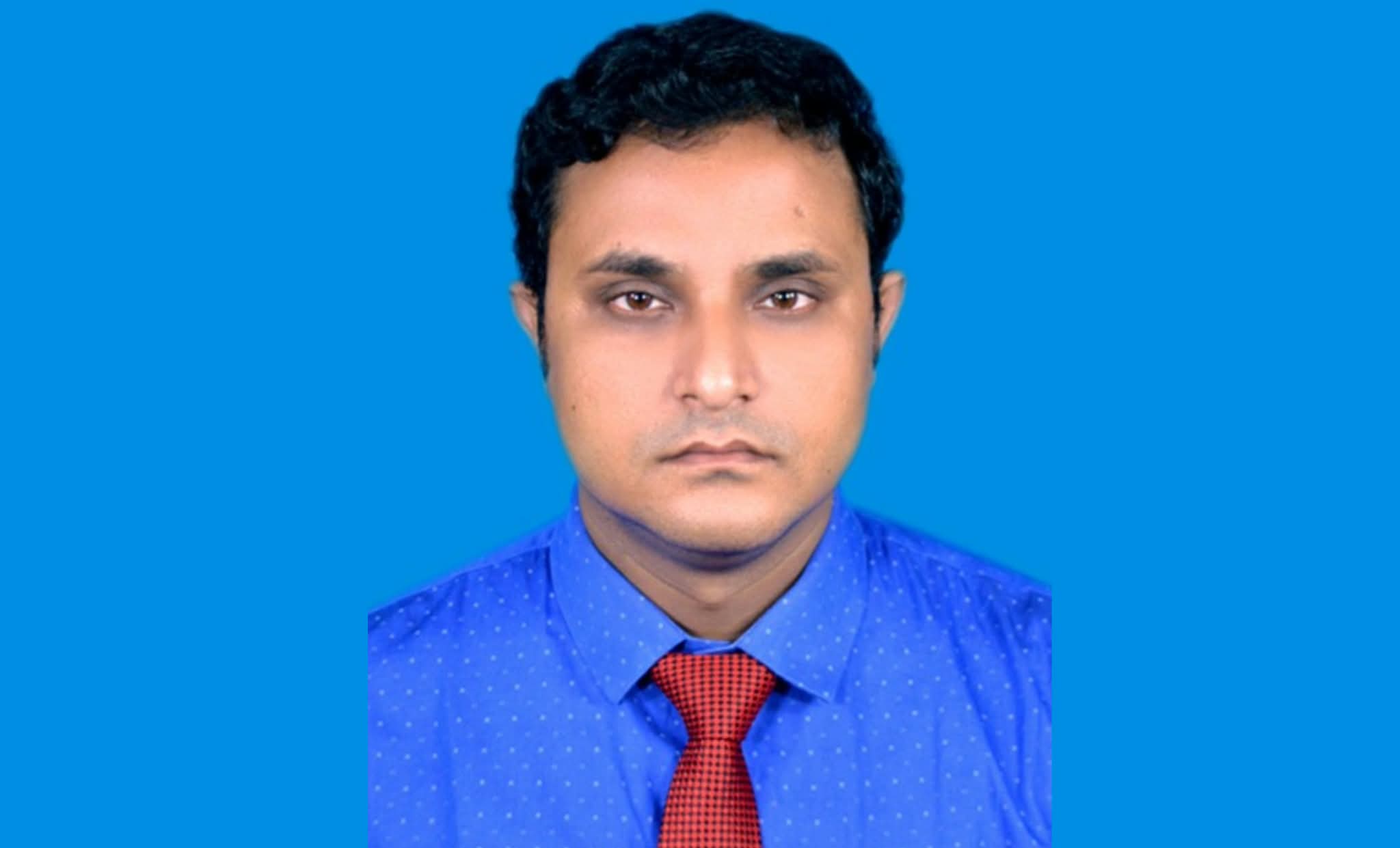
Habjul Alam Lemon, Assistant Professor of Accounting, Sherpur Government College, Sherpur and PhD fellow, AIS, University of Rajshahi





সংবাদের আলো বাংলাদেশ সংবিধান ও জনমতের প্রতি শ্রদ্ধাশীল। তাই ধর্ম ও রাষ্ট্রবিরোধী এবং উষ্কানীমূলক কোনো বক্তব্য না করার জন্য পাঠকদের অনুরোধ করা হলো। কর্তৃপক্ষ যেকোনো ধরণের আপত্তিকর মন্তব্য মডারেশনের ক্ষমতা রাখেন।